


STRYDE
40 Case Studies
A STRYDE Case Study
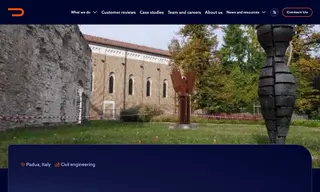
The University of Padua required subsurface imaging on the archaeologically sensitive site of the Scrovegni Chapel, which is built on the ruins of an ancient Roman amphitheatre. The challenge was to acquire seismic data while keeping ground disturbance and seismic activity to an absolute minimum to protect the historic structures and frescoes. To meet this challenge, they partnered with vendor STRYDE.
STRYDE deployed 1500 of their autonomous STRYDE Nodes™ for continuous 24-hour recording. The lightweight nodes were spaced as close as 1 meter apart, providing a near-zero footprint solution ideal for the sensitive terrain. The data collected, including both passive seismic noise and active data from a weight drop assembly, provided unprecedented geotechnical insights into the area's complexity, enhancing the archaeological and historical understanding of both monuments.
40 Case Studies